

At the beginning of this year, I wrote a substack about leaving a relationship at 39. This wasn’t planned at the time, but my ex penned a response to that piece, which is below.
To my ex - I thank you for your generosity in writing this and in letting me share it with the world.
And with that, here he is -
There’s this old joke about a drowning man who implores God to save him. Each time a boat or helicopter appears, he waves them off, certain that God herself will show up. When he finally drowns, the truth is revealed: God had sent the ships but he had been too stubborn (or foolish) to recognize them as divine providence.
I am that man.
The night Sara and I met I’d been out with friends shelling out cynical takes on the NYC dating scene. The apps had delivered a steady stream of hyper-busy Equinox members who seemed more inclined to share their lives with a Spaniel than an actual living person (who could blame them). And yet there she was. Radiant, beautiful, kind, irreverent. She’d recently left the corporate world to start a dating and relationships podcast. She’d guided her mom through her first mushroom journey. I was hooked.
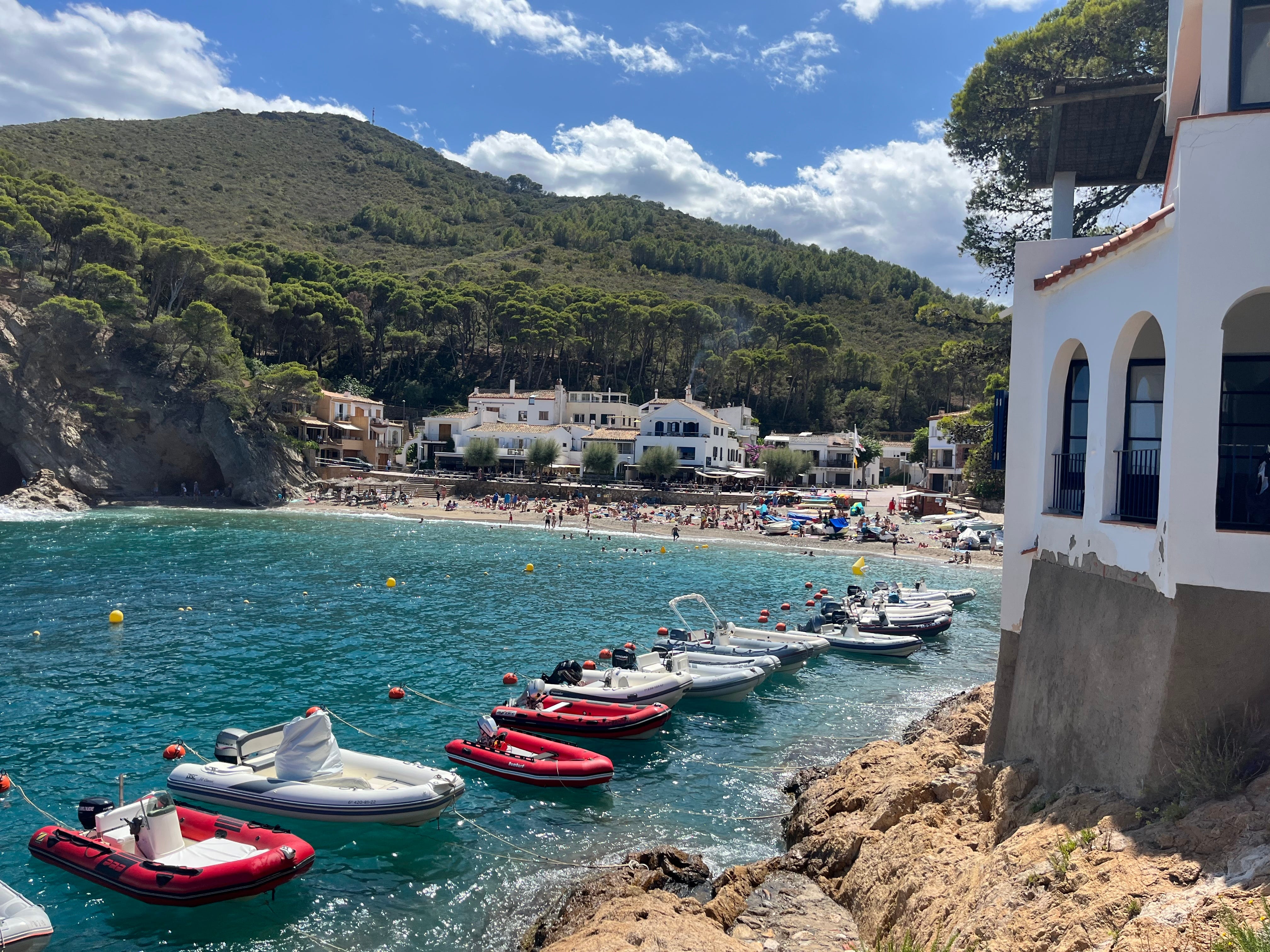
Our fifth date was a weeklong getaway on the Costa Brava in Spain. We spoke for hours over olives and wine, discussed modern romance, dissected Emily Ratajkowski’s divorce. She knew—it seemed—that nothing lasts forever, that even one of the most desired women in the world could be scorned. This put me at ease.
While Sara had grown up expecting a certain set of behaviors from the men courting her—I’d taught myself to resist giving in to the trappings of modern romance. Call it disorganized attachment or Peter Pan syndrome—either way—I’d yet to figure out how to play the role of doting boyfriend and often sneered at the tropes, cliches and conventions that American romcoms are known for. I’d also noticed that my resistance to these formulas rarely registered with my romantic partners during the initial phases of courtship. I call this chasing ‘Mr. Big’—when otherwise emotionally stable, romantically idealistic women tolerate avoidant men for the sake of ‘chemistry’ and intermittent validation—and sometimes suspect that Sex and the City taught an entire generation of women to romanticize this dynamic thereby reinforcing the behavior in men.
Within months, Sara had seen the writing on the wall. We argued about my texting etiquette, my inability to express words of affirmation, my evasive answers when asked to express interest in long term partnership. When Sara asked whether she should stay in NY to pursue our fledgling romance, I tensed up and feigned indifference. The sudden surge of expectation generated an intense swell of resistance. I was 43 years old and had never answered that question in the affirmative. The truth in that moment was that it felt easier to let her go than to live up to the commitment she was asking for.
On our six-month anniversary—now confident that we were unlikely to be a long-term match—Sara was firming up plans to move to LA. She’d already sold her apartment, shipped her car, and expressed disappointment that I’d done nothing to hold her back. We were in my Brooklyn apartment that morning when I answered an early phone call. A doctor had recently prescribed a scan of my chest to follow up on a lingering cough. He wasted no time with the news: I’d been diagnosed with a rare cancer and would likely be needing months of treatment. When Sara woke up, I gave her the news thinking well, now she really has to leave.
Her words to me that day: “I’m not leaving.”
Instead, Sara showed up for me in ways few others have. She came to every doctor’s appointment, spent nights with me at the hospital, researched my diagnosis, connected me with survivors and gave me the strength I needed to confront my worst fear. When finally the time came for chemo, she sat with me through tears and terror. What should’ve been the lowest point in my life became the closest I’d ever come to real connection, to accepting the love and devotion I’d always rejected.
For the next ten months Sara and I were a couple in the truest sense of the word. We had dinner together every night, strolled through Brooklyn parks, and planned our next summer getaway. She held me to sleep every night and brought me green juice every morning. When things got tough, she’d throw her hands up in the air with a smile and say “we’re gonna live!” I became convinced that fate had finally, convincingly spoken up. Someone somewhere had sent out a distress signal on my behalf and Sara had been its recipient. The universe had conspired in my favor.
With a newfound commitment to heal my heart along with my body, I spent those months trying to diagnose the parts of me most averse to partnership. I confided in therapists, read the books they recommended and clung to Victor Frankl’s assertion that love is the highest good a person can reach for. I hummed the ‘Nature Boy’ refrain in my head like a TM mantra: The greatest thing you’ll ever learn is just to love and be loved in return. I wanted so much to believe the song, know it, embody it. To no avail. The more my love for Sara grew, the more a familiar, creeping rebellion grew within me. I worried about having to live up to the sacrifice she’d made for me. I grew anxious about what the next phase of our relationship might look like. I began scanning the room for an emergency exit. In hindsight, I see that I’d only ever experienced romance as an intoxicating, exhilarating affair and anything less often left me restless, irate or worse, indifferent. No part of me - body or mind - knew how to respond to consistent, loving, secure partnership.
Four months after the end of my treatment, Sara ended our relationship.
Now—still certain of our love for one another—Sara and I are holding out in hope that we may find partners more suited to our expectations. Do I believe I will find a better match? The answer is a resounding no. You simply cannot recreate the level of trust and intimacy Sara and I built over the last three years. When I am near her, I feel the kind of tenderness and affection most people only dream of. I am deeply moved by the love she showed me and still doles out daily to her friends and family. Why then are we not together? I believe the answer lies in the stories we tell ourselves about partnership and romance. For some, it’s as straightforward as a Hollywood narrative arc—meet-cute, complication, happy ending—for others, the tension never fully resolves.
Somatic practitioners believe that our bodies carry tension, trauma and stress imprinted during our first few years of life. Adult relationships tend to mirror these events and are the primary trigger of defense mechanisms created by those early experiences. My formative years were marked by divorce, precarity and inter-parental conflict. I don’t mean to divert from my own responsibility or cast blame on my parents, but I simply never experienced a couple living lovingly side-by-side as Sara did with her own parents. As a result, my mind constantly devalues what feels stable and available. I associate love, passion, and eroticism with novelty, and often lose interest when things feel secure. This pattern has been the defining feature of my adult life. Imagine being parched and desperate for water but reluctant to drink, taking only tiny sips for fear that the water may submerge you. That is how I feel about Sara. The months of tenderness, proximity and bonding during my treatment were the closest I’d come to being in love and partnership; they were also our undoing.
The upside is that Sara has helped me understand where my resistance comes from, and I am actively ‘doing the work’ that may allow me to one day be a better partner. I no longer expect relationships to be messy and inconvenient and see my reactions for what they are: well-rehearsed evasion strategies established long ago to protect myself from abandonment and disappointment. And while I often lay awake at night fearing that I will look back on my life and regret not having built a family with Sara, I take solace in knowing that she may yet find what she is looking for.
If you have questions or topics you want to submit anonymously, you can do that here.
You can also DM me or leave a comment on the Substack app; I’d love to hear what’s on your mind.
Sara… I think you just healed the broken hearts of half the women in the world with this one lol
honestly, the most heartbreaking part is him saying he knows he probably won’t find a better match and still not being able to choose the relationship. love is so much more complicated than just finding the right person